
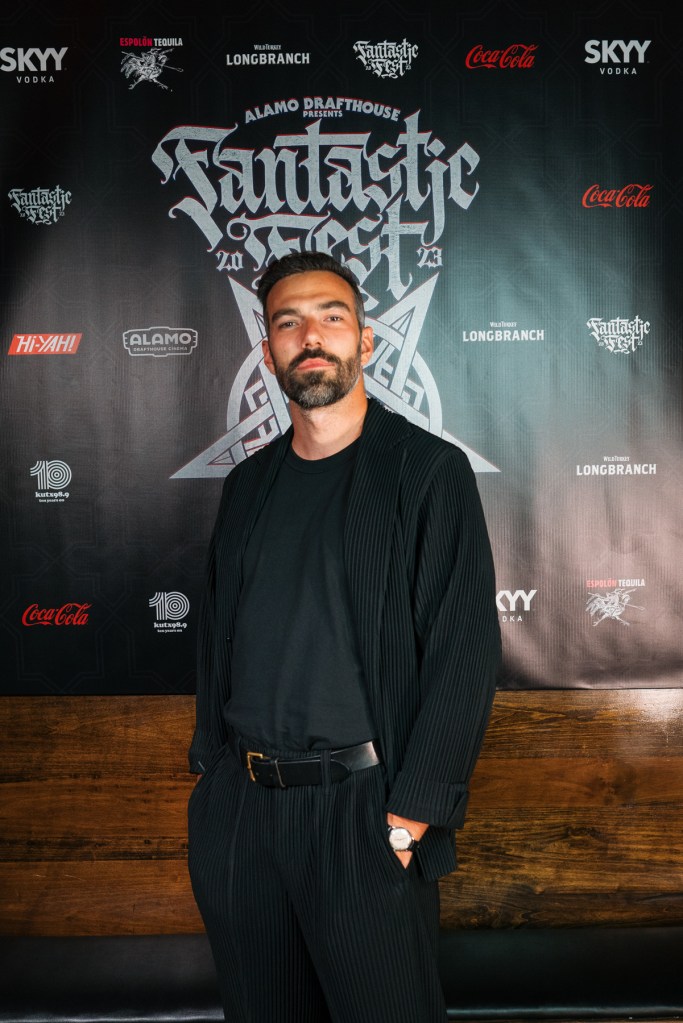
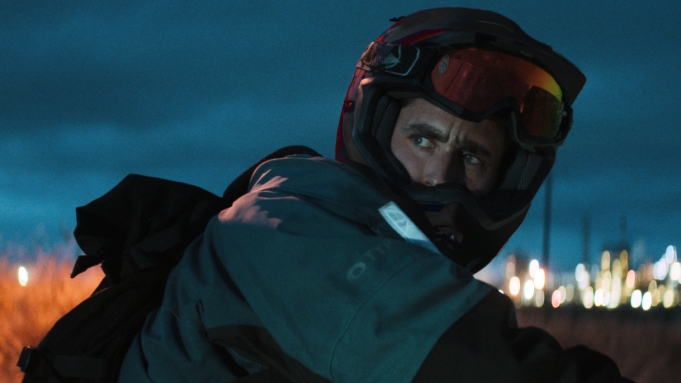
Jamie Childs is the director of Jackdaw, a new film starring Oliver Jackson-Cohen and Jenna Coleman. Set in the Northeast of England, Jackdaw draws from elements of ’90s rave culture that still exists in pockets of the country, using these influences to punctuate the desolate landscape. Saint Audio spoke to Childs, discussing the rave music that influenced the film’s whole creation, the soundtrack that shaped Jackdaw and the process behind its selection.
What did you look for in the soundtrack to Jackdaw?
So the score came about before the film came about. I knew I wanted to make a film around the underground subculture of ’90s rave. I’ve got friends who I went to school with who still listen to proper ’90s rave and I’ve always thought there’s this subculture that still exists up here.
So, when I was writing Jackdaw, I thought, what if I took that one step further and made out there was this proper rave culture that still exists?” Lads and lasses up here still drive ’90s Boy Racer cars and still listen to Makina.
So, for me, I had a soundtrack of stuff that I grew up listening to. I remember driving around the villages in the Northeast as a kid and people were listening to that kind of music and it had this weird atmosphere. Who are these people? Who are these lads listening to this music and driving these kinds of cars?
So, I was like, what if you took this, and Hollywood it up a little? Make it into this dystopian world that still exists and everyone still listens to that kind of music? Which isn’t a million miles away from the Northeast.
So I was putting together the soundtrack from the very beginning? When I sat down to write Jackdaw I was listening to pretty much what ended up being the score.
I was getting really excited the whole time. I’d go to bed like finishing writing for like four hours straight and I felt like I’d been to an all-night rave, which I sort of had been in a way.
You’ve mentioned movies such as Ghost in the Shell and Blade Runner 2049 as touchpoints for creating atmosphere in movies, and obviously, soundtracks play a major role in that. What were some soundtracks that influenced your process?
Honestly, it was hard to find references like that. If I was writing a really brooding scene I’d listen to Blade Runner 2049, (Hans) Zimmer’s score for that. It’s quite hard to not get too influenced if I listen to too much score, but something like that, where it’s this brooding electronic sort of atmosphere, would be really helpful for putting my head in the right space.
Let’s say I was doing one of the atmospheric beats in between the action beats, I would listen to that kind of stuff, but then when I would get on to a fast sequence I’d always go back to The Prodigy’s first album, Experience, and we were fortunate enough to get [the album’s opener] “Jericho” as the closing track of the movie. Everyone always ends movies soft, go to black credits, and I didn’t want to. I wanted it to feel like you’d literally been to a rave when you watch Jackdaw so I went white with the credits. I’ve been in the cinema when that comes on and it’s kind of like an assault on the senses, especially with that drop in “Jericho”.
When I came up with the idea for Jackdaw, I was like: “What if you made a film where you actually just use Experience as the score?” For me, there’s ’90s rave, and then there’s the Prodigy. There’s just something different. They had this kind of cinematic quality to them.
So in some ways, when I set out to do Jackdaw, I was like: “Imagine if I convinced the producers to let me use the whole of Experience for the score?” I managed to get one track out of it which is amazing. And [“Jericho”] is their first ever published piece of music. So, I ended my film with their first bit of music. That’s cool. I was happy about that.
How did you manage to toe the line between using licensed music for a reason and advancing the movie with them, as opposed to just throwing them in the movie for a cheap pop?
I think partly that was because I actually had the intention. I was lucky enough to get most of the tracks that I’d been writing these sequences to, not every single one but most. That Aphex Twin track for example, “Polynomial-C”, it’s got a certain momentum to it, an atmosphere to it, it’s floaty, almost euphoric, which is an atmosphere I wanted Jackdaw to have.
All of the tracks we ended up with have that in common, I think they’ve got some sort of dreamlike euphoria to them. But I think partly the reason why they don’t just feel stuck on is because [the scenes] were genuinely written to those pieces of music.
I know Tarantino does that as well, he’ll put the soundtrack together then he writes the film. It’s so he knows the pacing of the sequences, and he knows the peaks and troughs based on the album that he’s put together. So, I definitely had that advantage, and it helped me write. The music was integral to getting those sequences to work, even on paper.
You mentioned before about how rave music has this cinematic quality to it. How easy was that to translate onto film?
There’s not a lot of films I’ve seen with rave music as the score. We had this compiled soundtrack, and I was showing that to the financiers to explain the atmosphere of the film. But because they all had a dreamlike quality to them, they felt in the same world. I think it actually helped get across like the feeling of the film. And they had to have like a cinematic quality to them, they couldn’t just be able to say there’s like a cheap needle drop or something.
You know, when you go to a rave or something and there is a build-up to the track for days it seems and eventually you drop it, I wanted the film to have that feeling about it. I wanted it to feel like it was constantly building to the moment where it drops. I come from like a music background myself, my degree is in sound engineering, so I understood the importance of that part of the film, as opposed to it being an afterthought.
You’ve spoken about James Drummond, music supervisor for Jackdaw, having a lot of influence in the production, what sort of insight did he bring?
Loads. The score and the soundtrack wouldn’t be anything like what it is without James. He’s one of my best mates, we used to be in a band together so we understand the things we like and don’t like about music.
He comes from the electronic dance music world. That’s what he works in. Even the history of who his dad is (Bill Drummond of the legendary electronic band the KLF). We managed to get a KLF track in this film, not because it’s his dad—we paid him exactly the same amount of money as everyone else. He had to convince his dad because I wanted to use it, not because he did! I wanted “It’s Grim Up North”, I just thought was a perfect track and he was like: “Oh we can’t use a KLF track,” but we had to. It’s so good!
But James helped. Even when I was writing the movie he was sending stuff across, like that “Tingler” track by Smart Systems, it’s so edgy and just sums up the Silas character so well.
So Jim sent me that when I started writing Silas and as well [the scene in that old bingo hall], even the way we lit it, I was getting influenced for like the colour of the lighting based on that piece of music. That was all James. If I took the visuals, he took them the audio in that sense. It was a total collaboration from start to finish.
For more information on where to watch Jackdaw, follow the film’s official Instagram.
 Saint Audio